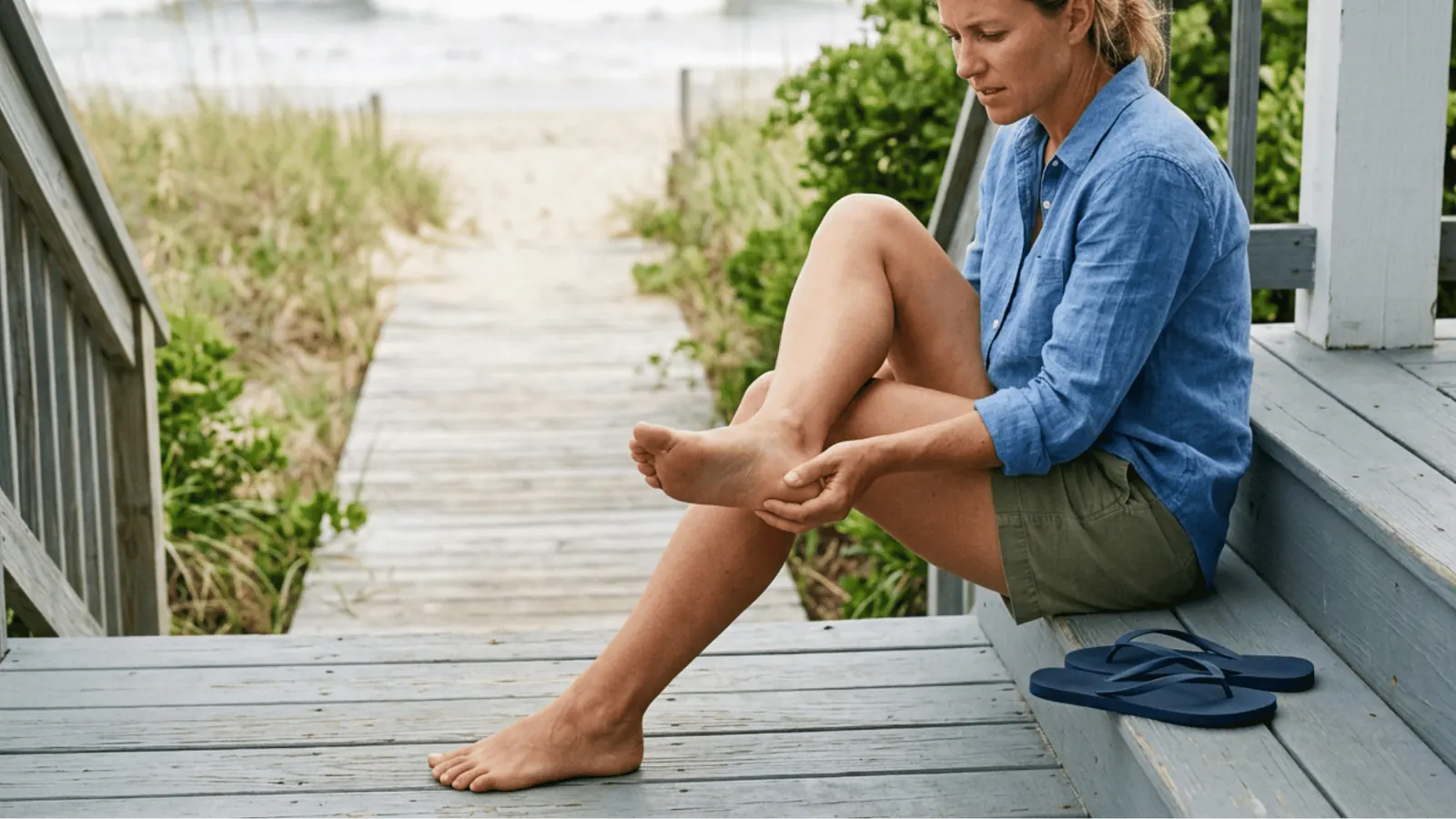
The footwear may not be the only cause, but very flat, flexible sandals can increase strain on an already irritated plantar fascia.
Why Can Flip-Flops Make Heel Pain Worse?
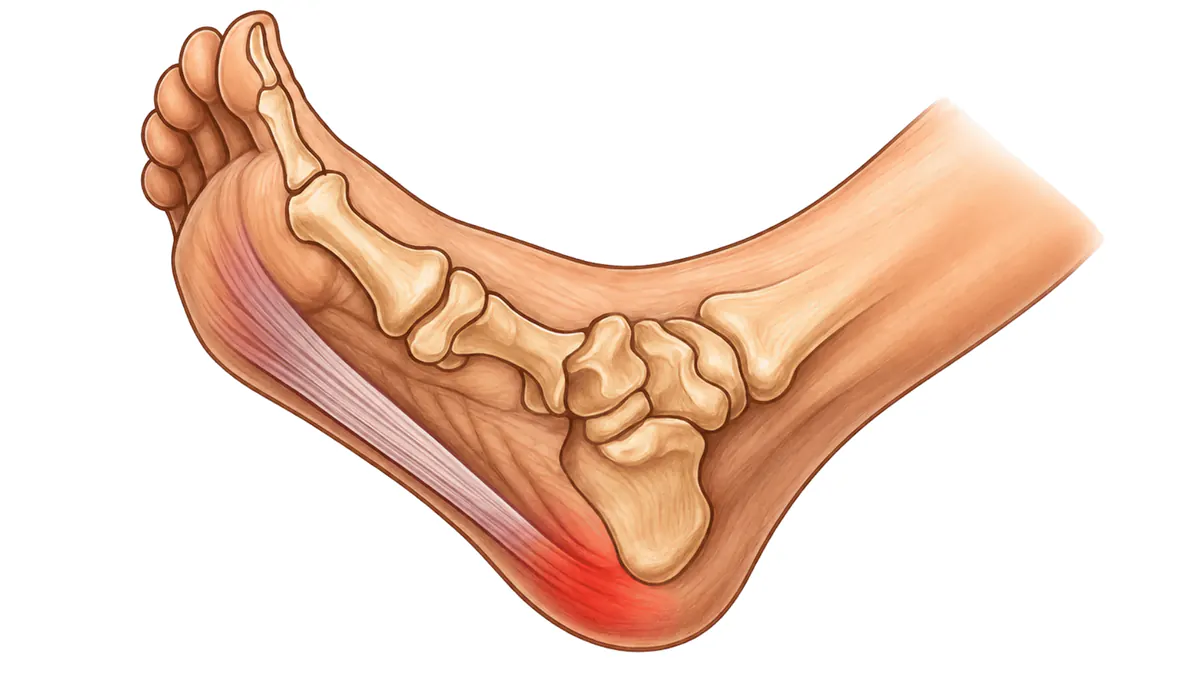
The plantar fascia is a strong band of tissue that runs from the heel toward the toes and helps support the arch. It manages load every time the foot accepts body weight. When that tissue becomes irritated, the result is often pain at the bottom or inner side of the heel. Learn more about plantar fasciitis treatment.
Many basic flip-flops bend in half, provide little contour under the arch, and leave the heel free to move. That combination can change how the foot works during each step. The toes may curl or grip to keep the shoe from sliding, the calf and plantar fascia may work harder, and the heel may receive less cushioning on hard surfaces.
This does not mean every sandal is harmful or that everyone with heel pain has plantar fasciitis. Foot structure, activity level, tight calf muscles, a rapid increase in walking, body weight, hard flooring, and worn-out shoes can all contribute. Heel pain can also come from a stress injury, Achilles tendon problem, nerve irritation, arthritis, or reduced heel-pad cushioning.
Signs the Pain May Be Plantar Fasciitis
- Pain under the heel or slightly toward the inside of the heel.
- Pain with the first steps in the morning or after sitting for a long time.
- Symptoms that ease after a few minutes of movement but return after prolonged standing or walking.
- Tenderness where the plantar fascia attaches near the heel.
- A recent increase in walking, running, standing, travel, or time spent in unsupportive shoes.
Numbness, tingling, significant swelling, pain at the back of the heel, pain after a sudden pop, or severe pain that does not follow this pattern deserves a closer evaluation. Read our related guide on why heel pain is not always plantar fasciitis before assuming the diagnosis.
What to Do When Flip-Flops Trigger Heel Pain
1. Give the irritated tissue a temporary break
Reduce the activity that clearly worsens the pain for several days. That may mean shorter walks, fewer hours barefoot on hard floors, or switching from running to a lower-impact activity. Complete inactivity is not always necessary, but repeatedly pushing through a worsening limp can prolong the problem.
2. Switch to supportive footwear
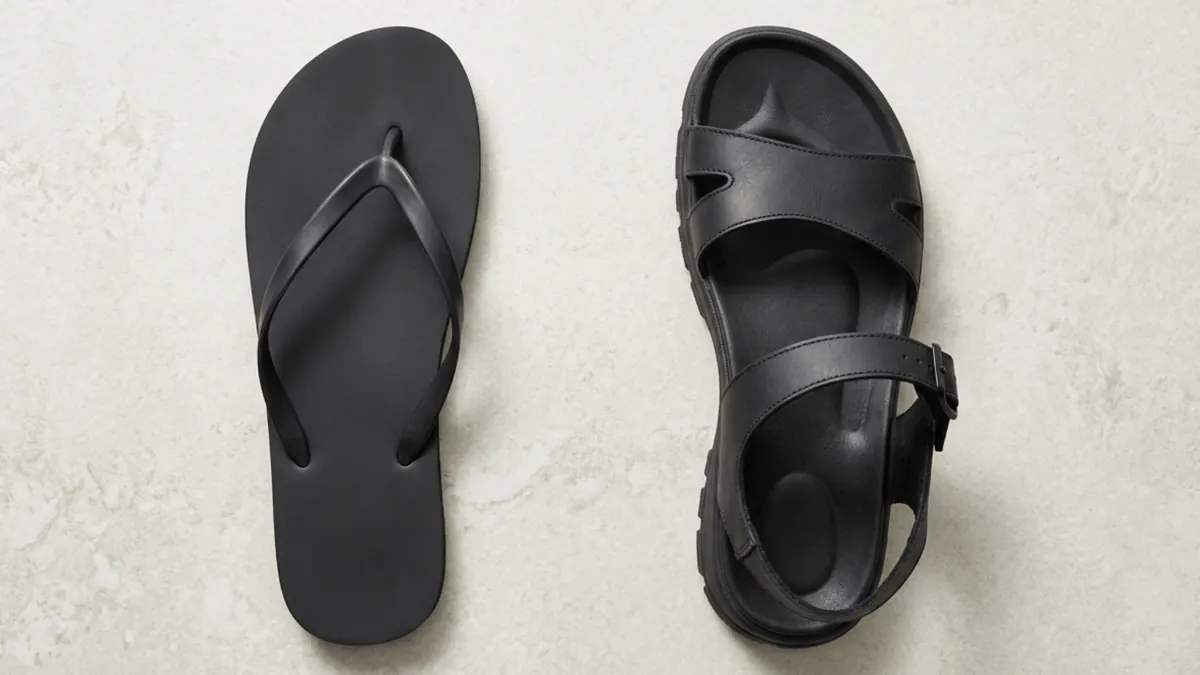
Choose a sandal or shoe that feels stable rather than floppy. The best option for you depends on your foot shape, but useful features often include a contoured footbed, moderate arch support, heel cushioning, a firm sole that does not twist easily, and straps that secure the heel or midfoot.
3. Stretch the calf and plantar fascia gently
Tight calf muscles can increase tension through the heel and plantar fascia. A clinician can confirm which stretches are appropriate and demonstrate the correct technique. Stretching should feel controlled, not sharp or tearing. You can also review this morning foot stretch.
4. Use cold carefully
A cold pack wrapped in a thin towel or rolling the foot over a chilled bottle may temporarily reduce soreness. Do not place ice directly on the skin. People with reduced sensation, neuropathy, or circulation problems should ask a clinician before using hot or cold treatments.
5. Avoid walking barefoot on hard floors
Bare feet on tile, hardwood, pool decks, and concrete can add repeated load when the heel is already sensitive. Supportive indoor footwear may be helpful during a flare.
How to Choose a Better Summer Sandal
- The sole should resist folding completely in half at the arch.
- The footbed should match the shape of your arch without creating a hard pressure point.
- A heel or back strap should help keep the sandal on without toe gripping.
- The heel area should have enough cushioning for the surfaces and distances you walk.
- Your toes should not hang over the edge, and straps should not compress the forefoot.
- Replace sandals when the tread, cushioning, or footbed has worn down.
A comfortable shoe is not automatically the right shoe for a specific diagnosis. If pain persists, a foot-function evaluation can help determine whether a different shoe, an over-the-counter insert, custom orthotics, or another treatment is appropriate.
When Should You See a Podiatrist for Heel Pain?
Schedule a heel pain evaluation when heel pain lasts more than a couple of weeks, keeps returning, causes limping, limits work or exercise, or is not improving with reasonable footwear and activity changes. An examination can identify the painful structure, check flexibility and foot mechanics, and decide whether imaging is needed to rule out another cause.
Treatment is based on the diagnosis and may include a personalized stretching and strengthening plan, taping, footwear changes, physical therapy, inserts or custom orthotics, and other conservative options. For selected persistent cases, Dr. Sean W. Lazarus may discuss technologies available at the office, including radial shockwave therapy. No single treatment is right for everyone.
Red Flags That Need Prompt Medical Attention
- A sudden pop followed by bruising, swelling, or inability to bear weight.
- A red, hot, swollen foot or fever.
- A wound, blister, or skin breakdown, especially with diabetes or neuropathy.
- New numbness, weakness, marked color change, or a foot that feels unusually cold.
- Heel pain after a fall, jump, or direct injury.
Frequently Asked Questions
Can flip-flops cause plantar fasciitis?
Flip-flops are rarely the only cause, but thin, unsupportive pairs can increase strain on the plantar fascia and aggravate symptoms, especially when you suddenly walk more or spend long periods on hard surfaces.
Are all sandals bad for heel pain?
No. A stable sandal with a secure strap, contoured support, cushioning, and a sole that resists twisting may be more comfortable than a flat, loose flip-flop. Fit still needs to match the individual foot.
Why does my heel hurt most with the first steps in the morning?
Plantar-fasciitis pain commonly feels worse after rest. The plantar fascia and calf can tighten while you sleep, and the first weight-bearing steps place sudden tension through the irritated tissue.
Should I keep walking if my heel hurts?
Mild activity may be reasonable, but reduce or stop activities that cause escalating pain, limping, or worsening symptoms afterward. Persistent pain deserves an assessment rather than repeated “walk it off” attempts.
Can a podiatrist tell whether the pain is plantar fasciitis?
Yes. A podiatric examination reviews the location and pattern of pain, foot structure, flexibility, gait, and other possible causes. Imaging may be considered when the pattern is unusual or another injury is suspected.
Heel Pain Should Not Decide What You Do This Summer
West Haven Foot & Ankle Center can evaluate the cause of recurring heel pain and explain conservative treatment options based on your exam. Individual results and treatment recommendations vary.
Call (475) 238-7400 or schedule an evaluation.